Double Exposure Dealer Blackjack: What Happens?
The double exposure dealer blackjack variant rips the conventional rulebook to shreds by flipping both dealer cards face-up before you act — and that single mechanical twist mutates the entire probability engine under the felt. 🎯 Anyone claiming this is just "regular blackjack with extra info" has never audited the payout tables or watched a dealer bust sequence in this format. The house does not hand you a free edge; it charges you brutally elsewhere, and the math is unforgiving.
Here is the core mechanic that separates this game from everything else at the table: the dealer's hole card is exposed, and if that total lands anywhere between 12 and 16, the dealer automatically wins every surviving player bet — regardless of your hand strength. That is not a misprint. A dealer 16 is a nuclear weapon in this format.
The Dealer 22 Push and the 12-16 Trap
When the dealer draws to 22, it is treated as a push rather than a bust — a structural concession that quietly strips value from every player who thought a face-up dealer hand meant free money. Combine that with the 12-16 auto-win clause and you begin to see the trap: the Double Exposure Dealer Blackjack table is engineered so that the exposed card functions as bait, not charity. The dealer busts far less often than intuition suggests, and when the hole card sits in that dead zone, you lose even holding a natural 21. That is the mechanical heart of it. The information advantage is real, but the payout distortion and the auto-win zone are the counterweights.
Veteran players who migrated from standard shoe games consistently misprice this variant because they carry over bust-rate assumptions that simply do not apply. In a normal game, a dealer upcard of 6 signals a bust probability north of 40%. In double exposure, that same upcard with a hidden partner in the 12-16 band means you are drawing dead before the shoe even turns. 🃏
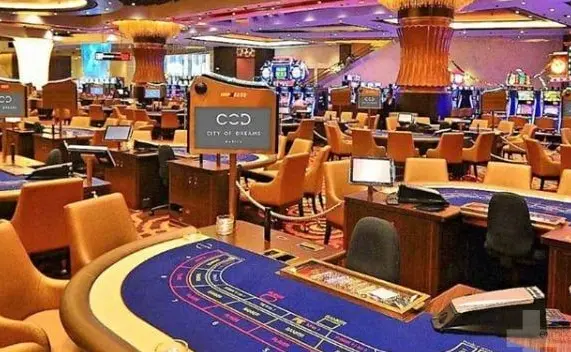
Payout Compression and the Natural Blackjack Penalty
Scan the felt and you will find that a natural blackjack frequently pays even money instead of the traditional 3:2 — a silent tax that compounds across hundreds of hands. Some tables push a blackjack against a dealer 22, which is not generosity but a rounding of an already hostile structure. The Double Exposure Dealer Blackjack rule set deliberately compresses top-end payouts to fund the informational reveal. Run the numbers on a million simulated hands and the house edge typically climbs well past 1%, sometimes approaching 2% depending on the natural-payout clause and the 22-push behavior.
The variance profile is also vicious. Because the dealer's 12-16 zone produces guaranteed losses, your drawdowns cluster in streaks that feel statistically impossible. Bankroll swings in this format are not gentle. They are cliff edges.
Hardware and Shoe Integrity Concerns
From a hardware audit standpoint, the double exposure format demands stricter shoe verification than standard games because the entire value proposition rests on genuine card exposure. A misread hole card, a sticky shoe, or a shuffled deck sequence that clusters the 12-16 band into high-frequency runs corrupts the game's already razor-thin balance. Reputable operators run continuous shuffle machines with audit logs, but low-tier tables skip that transparency — and a rigged or faulty shuffle in this variant is far more damaging because the auto-win zone magnifies every sequencing error into guaranteed player losses.
Do not sit at a double exposure table without confirming the natural-payout clause and the 22-push rule from the printed felt. Those two lines of text decide whether the variant is a calculated grind or a pure donation. The dealer's 12-16 auto-win edge, the even-money natural tax, and the 22-push carve-out stack into a house margin that punishes anyone who treats the exposed hole card as a genuine advantage. 🎲